Scaling
Scaling a Digital Business in International Markets: Growth Strategies Without a Proportional Increase in Costs

A digital product has a unique economic property: the cost of serving each additional user tends toward zero. That is why international expansion looks so attractive for online companies — code does not need to be shipped across borders, and there is no warehouse to open in every country. In practice, however, many companies enter new markets only to discover that costs grow faster than revenue. Let’s look at how to scale without multiplying costs at the same rate.
The Principle of Operating Leverage
The key to profitable scaling is operating leverage: a situation in which most costs are fixed while revenue grows with the number of customers. A platform built once can serve ten thousand or ten million users if its architecture was designed for growth from the start. Each new market then adds mostly revenue rather than new cost lines.
Problems arise when a company creates a separate team, a separate product version and a separate technology stack for every country. This approach quickly turns a global business into a collection of local ones, each requiring its own management.
Growth Strategies Without a Proportional Increase in Costs
- A single platform with localization as configuration. Languages, currencies, tax rules and payment methods should be plugged in through settings, not by rewriting code.
- Cloud infrastructure with autoscaling. Capacity grows with traffic and does not sit idle during quiet periods.
- Partnership go-to-market models. Local distributors, resellers or aggregator platforms provide access to audiences without opening your own office.
- Automated support and onboarding. Knowledge bases, chatbots and self-service let you cover new time zones without round-the-clock shifts.
- Step-by-step market validation. First a minimal launch and demand testing, then investment in a full presence.

How to Choose Markets
Not all markets are equally attractive as a first step. Experienced teams assess the size of the addressable audience, the level of digital penetration, popular payment methods, regulatory requirements and the intensity of competition. It is often wiser to start with a neighboring market that has a similar language, culture or regulation to fine-tune processes, and only then tackle large and complex jurisdictions.
Hidden costs matter as well: licensing, local data-storage requirements, tax residency and legal support. Sometimes it is these, rather than marketing, that determine the real cost of entering a market.
Localization Is More Than Translation
Users in different countries perceive price, design, tone of communication and even the order of sign-up steps differently. A translated interface without adapted payment methods or native-language support often converts poorly. At the same time, deep localization should not break the single codebase: a modular approach works best, with market-specific features living in separate, easily changed layers of the product.
Metrics Worth Tracking
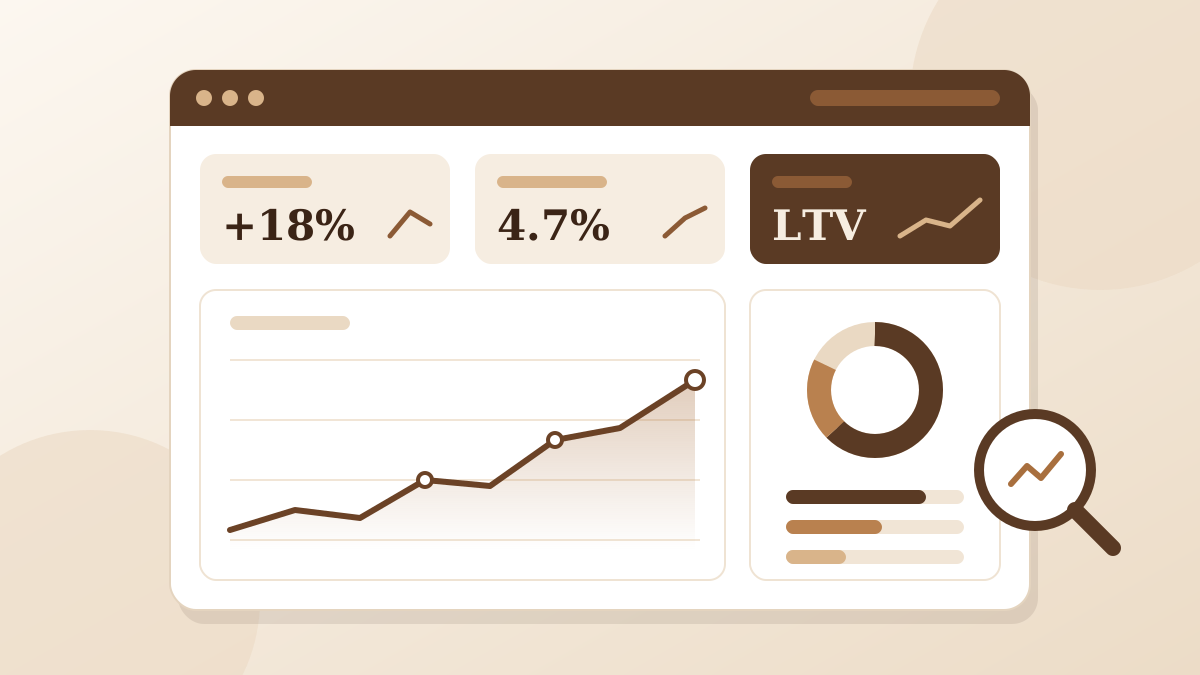
To understand whether scaling is truly efficient, looking at total revenue is not enough. The important metrics are:
- Customer acquisition cost (CAC) in each country separately.
- CAC payback period and customer lifetime value (LTV).
- Infrastructure and support costs as a share of revenue.
- Revenue per employee as an indicator of operational efficiency.
If revenue per employee is rising while infrastructure costs as a share of revenue are falling, the company is scaling correctly. If every new market requires almost as many resources as the previous one, it is time to revisit the business architecture before growth becomes unprofitable.