Platforms
The Economics of Digital Platforms: How Marketplaces and Ecosystems Are Changing Business Models and the Competitive Landscape
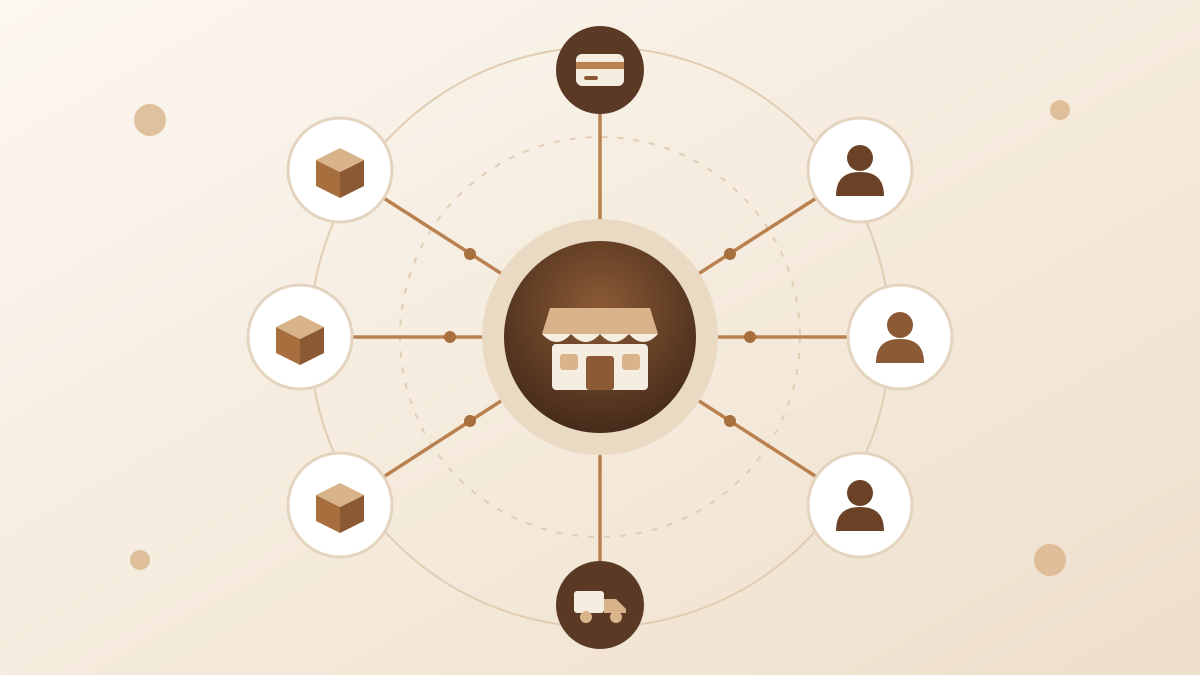
Just ten years ago, most companies competed on a classic linear model: make a product, find a buyer, sell it at a markup. Today, most of the world’s most valuable companies produce almost nothing themselves — they build environments where sellers and buyers, developers and users, advertisers and audiences meet. The platform economy has changed the very logic of value creation: a business is valued not by the assets on its balance sheet, but by the number of interactions it can orchestrate.
From a Linear Chain to Multi-Sided Markets
A classic business resembles a pipeline: resources go in at one end and a finished product comes out at the other. A platform works differently — it connects at least two groups of participants and earns money by making the exchange between them easier. A marketplace does not keep millions of products in its own warehouse, a ride-hailing service does not own a fleet, and an app store does not write most of its apps.
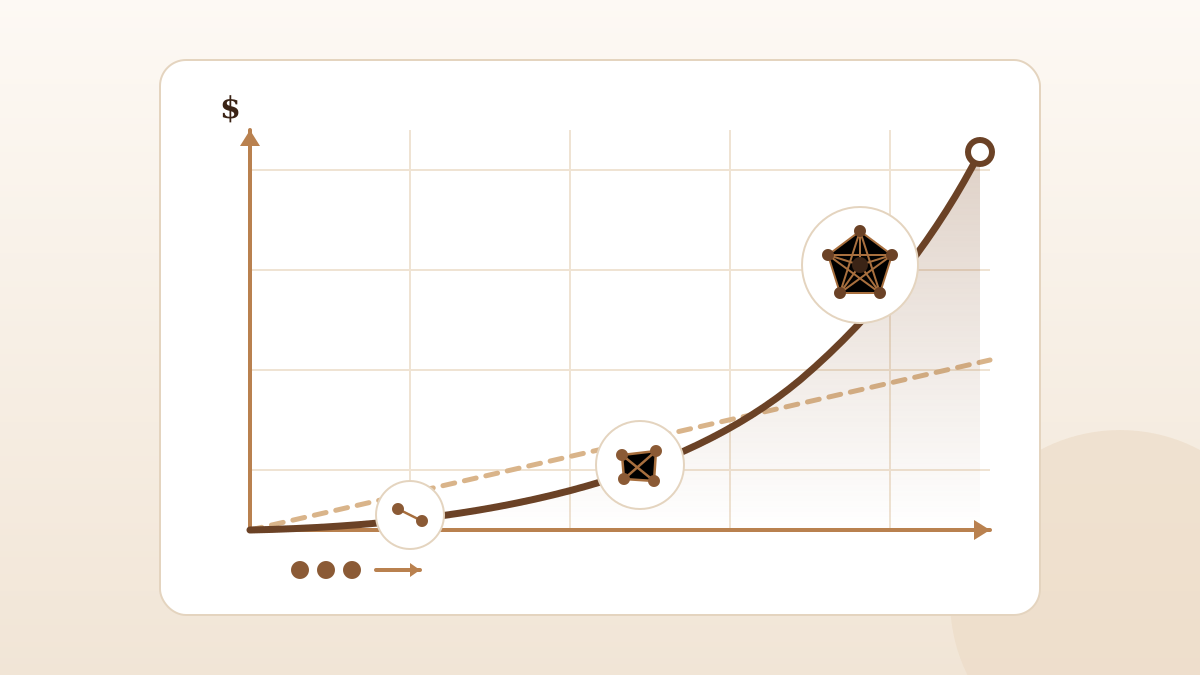
The main advantage of this model is the network effect. The more sellers a marketplace has, the more attractive it is to buyers; the more buyers it has, the more profitable it is for new sellers to join. This self-reinforcing loop explains why platform markets tend toward concentration: the leader captures a disproportionately large share of traffic, and catching up becomes more expensive every year.
How Platforms Make Money
A platform’s monetization model rarely relies on a single source. The most common mechanisms are:
- Transaction fees — a percentage of every sale or order that passes through the marketplace.
- Access fees or subscriptions for sellers who get advanced tools and analytics.
- Advertising and promotional services — paid placement of products in search and recommendations.
- Financial and logistics services: payments, lending, fulfillment and delivery.
It is the last item that turns a marketplace into an ecosystem. When a platform covers not only finding a buyer but also payment, delivery, returns and working-capital financing, leaving it becomes economically unattractive for a seller. Switching costs rise — and so does the stability of the platform’s revenue.
The Ecosystem as a Moat
An ecosystem is a set of connected services that reinforce one another through shared data, a single account and payment infrastructure. A user who buys goods, pays for services and keeps money within one environment generates far more data and revenue for the company than a customer of a standalone product. For the business, this means a lower cost of acquisition: every new service gets the audience of existing products practically for free.
At the same time, the ecosystem approach has its price. It requires significant investment in technology infrastructure, a unified identity system, data protection and the stability of every link at once. A failure in one service undermines trust in the entire ecosystem.
What Changes for Traditional Business
The rise of strong platforms forces traditional companies to choose a strategy. Some become sellers on third-party marketplaces and gain access to a huge audience, but lose direct contact with the customer and part of their margin. Others build their own platforms or niche marketplaces where they control the rules of the game. Still others combine both approaches: they use large marketplaces for acquisition and move retention and repeat sales to their own channels.
The competitive landscape is changing too: market power is increasingly defined by control over access to the customer rather than over production. That is why regulators in the EU and other jurisdictions are tightening requirements for large digital platforms — on the transparency of ranking algorithms, equal access for sellers and data portability.
Key Takeaways for Entrepreneurs
- Evaluate not only the cost of listing on a platform but also your dependence on it: the share of sales, access to customer data and the risk of rule changes.
- The network effect only kicks in after reaching critical mass — at launch, a platform often subsidizes one side of the market.
- Stability and trust are the foundation of the platform model: every transaction must be predictable for both sides.
The platform economy does not repeal the classic laws of business, but it moves competition to a new level. The winner is not the one with the best product, but the one who builds the most convenient environment for exchanging value — and can keep it reliable, transparent and beneficial for all participants.